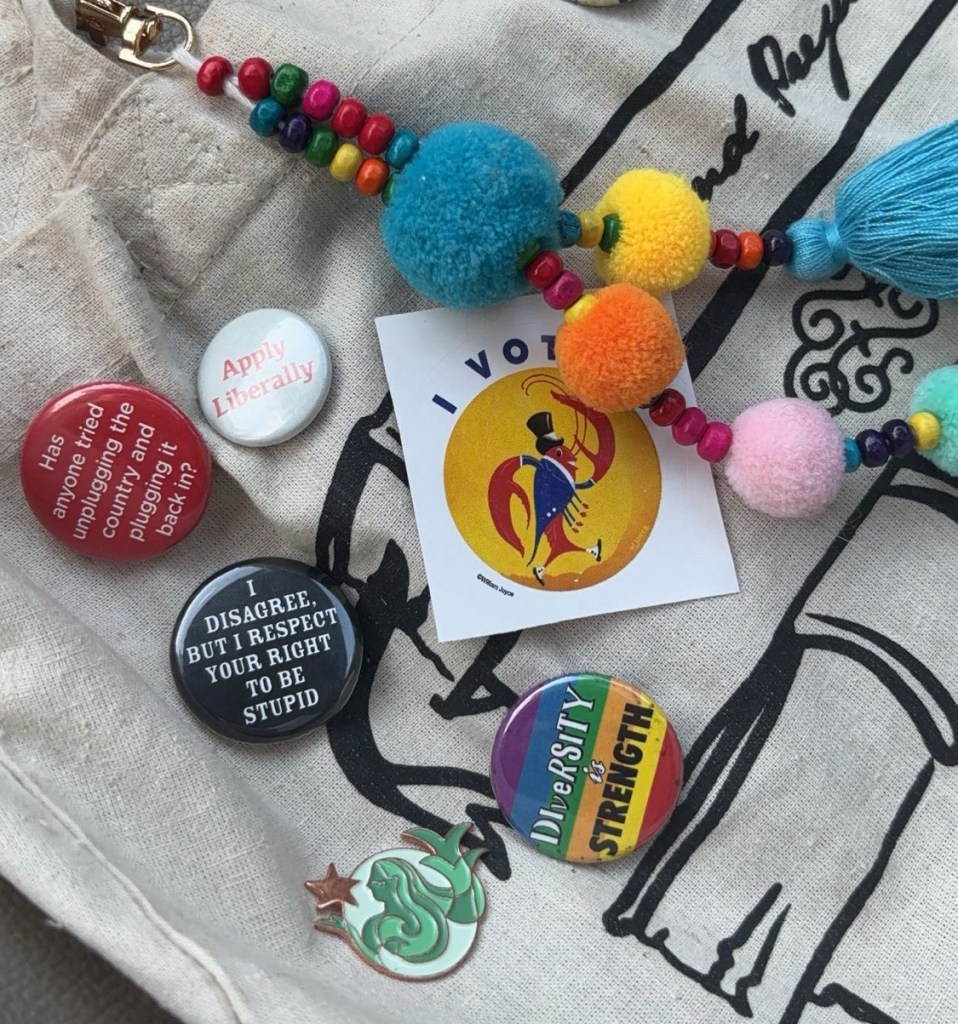
The state of the country today frightens me. I am frightened for my friends and loved ones as well as myself. I have tried being scared, I have tried to take preventative measures and dispel my worry by filling my time with hobbies and activities so that I don’t have to think about it. But I am tired. I’m tired of avoiding my problems and concerns with the country. After the 2024 Presidential Election, my fear has shifted into something else entirely. Anger. I’m angry at the complacency of the people around me more than anything else.
However, my anger and readiness to engage in productive conversation are almost always cut short. Nobody wants to deal with an angry and educated woman. So, often my political conversations are cut short with the phrase, “Let’s just agree to disagree.” More often than not, I will smile tersely and let the conversation die off for the sake of maintaining my close relationships. However, I am angry and frustrated at the fact that I am expected to replace my anger with politeness and respect around those who are not willing to have a productive conversation.
As with most things, “agree to disagree” is a great phrase…in theory. I find that this phrase works quite well in many types of disagreements. For example, when someone doesn’t agree with your opinion on who should win a Grammy. Or when someone is trying to assert that Diet Coke is better than regular Coke. These are simple opinions in which there is no right answer. Each side is equally valid and able to coherently argue on behalf of what they believe in a way that does no real damage to anyone.
However, as I have gotten older, I have discovered that people suggest “agree to disagree” on more serious matters. Particularly when it comes to political issues, I have heard that phrase far too much from the people in my life.
I take deep issue with someone using this phrase to preemptively halt a conversation simply because they do not want to listen to your side. It is a poor attempt to shut down any potential disagreement by meeting at a middle ground where each side concedes to the other in a sort of stalemate situation. While this isn’t inherently bad, I do find it incredibly short-sighted and ignorant when it comes to politics.
A productive conversation is rooted in listening and understanding the other side’s point of view. It requires looking at a situation fairly and considering all sides of the conversation as well as acknowledging the impact of your belief system. When it comes to politics, I have come to the conclusion that “agreeing to disagree” is ignorant. You are simply agreeing to disagree because you do not value both sides of the conversation. It is a method to to make yourself feel better, selfishly ending the conversation on good terms so that you do not have the listen and understand the other side fairly. It is a cop-out to offer this as a suggestion for fear of disagreement. By agreeing to disagree, you halt the conversation and engage in a toxic “feel-good method” to keep people from understanding or taking responsibility for the harm their actions and beliefs cause.
In addition, by agreeing to disagree, you are making a concession that both people have equally valid opinions and each mutually declares that those opinions are not so different, bad, or harmful that you cannot still have a meaningful relationship. That the relationship is more important than these differences. While this may be true in terms of foreign policy, immigration, or the environment, this may not be true when it comes to opinions on human rights. “Agreeing to disagree” and what it means at its core is not only unhelpful but is luxury that cannot be afforded by those whose rights are being infringed on.
“We can disagree and still love each other unless your disagreement is rooted in my oppression and denial of my humanity and right to exist.” –James Baldwin
Politics has largely shifted from how the country should be run to human rights issues that call into question whether the people around us should have the same rights, liberties, and freedoms to exist safely and equally. Politics and human rights are on different planes of existence, regardless of how politicized human rights may be. Debating whether a person’s rights are valid based on their religion, race, sexual orientation or anything else is irrational– and getting along with someone whose views on human rights oppose yours is an unrealistic expectation to have.
Agreeing to disagree on fundamental human rights issues is no longer a question of politics, but rather morals. We shouldn’t argue over whether certain people should be allowed basic liberties and freedoms, so when someone thinks differently about human rights, it is no longer a difference in politics – it’s a difference in virtue and how we live our lives. Human rights are not a matter of politics or preference, and our opinions on them can create a divide in the way we see the world and what we value.
Agreeing to disagree is a luxury people have because they are unaffected by the issue at hand and do not want to accept or acknowledge the harm they are causing. It is a privilege to concede in a debate that does not impact your life with severe consequences. Marginalized and oppressed groups do not have the privilege of placating those who disagree with their existence or the fundamental human right to exist equally. In this context, asking someone to “agree to disagree” on their human rights is the equivalent of saying, “You don’t deserve the same rights I have, but I expect you to not fight the fact I see you as inferior.” Asserting that it is ok to disagree on fundamental human rights is a privilege for the powerful, yet also asks the party that is impacted to agree on some level that these detrimental opinions are inherently true.
When politics don’t impede anyone’s freedoms or contribute to anyone’s harm, then it is ok to agree to disagree. When it comes to someone dictating the life of another and aiding in the suffering of others, then agreeing to disagree creates a situation where a person’s very existence is called into question. When someone’s life, health, and safety are being threatened by government policies, it is no longer a viable option to “agree to disagree.”
Refusing when someone says, “Let’s agree to disagree” doesn’t mean you don’t respect someone or even love them. It simply means that this is an important issue that needs to be talked about and is not a moral belief you are willing to waver on or concede.
I have no room for people in my life who have the privilege and luxury of pushing human rights issues aside. If you disagree on certain human rights issues, then I believe you are wrong in a way that I cannot overlook. I can no longer excuse or overlook these beliefs in a way that is healthy for my own well-being because it calls into question your morals. Usually, these skewed opinions mean that our priorities and fundamental beliefs are so far unaligned that it is detrimental to my life and views.
Agreeing to disagree in these matters means silencing myself and more importantly, betraying the people who bear the burdens and consequences of these beliefs— and this is not something I’m willing to do. I would rather have the hard conversation and stand up for my beliefs than placate myself or those around me, even if it results in no longer being able to have someone in my life.
Instead of “agreeing to disagree,” we need to start facing hard truths and opinions by having the conversations that matter. Too often, we are afraid of upsetting the people close to us. Yet, conversations about human rights need to be had so that we can stand up for our beliefs when they are challenged. In addition, these conversations advocate for the people who are not able to advocate for themselves.
The next time someone tells you to stop being angry and that you should politely “agree to disagree” on human rights issues, stand up for your morals. Stand up for those who cannot stand up for themselves.
 Twenty Somethings
Leave a comment